ServicesWhole-Home Filtration
Whole-Home Filtration in Coppell
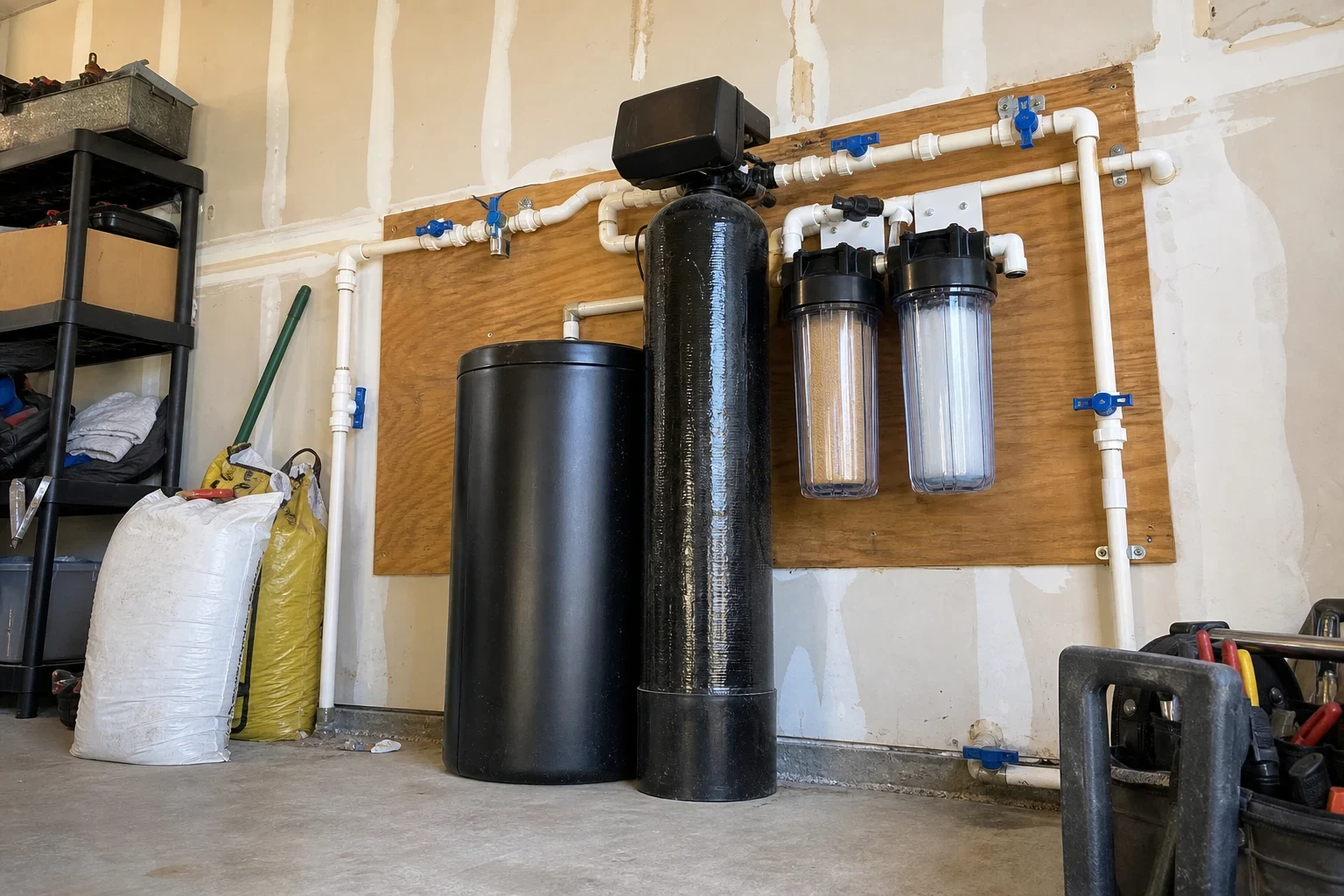
A whole-home filter sits where your water line enters the house. It takes out chlorine taste, odor and grit before the water reaches any tap, shower or appliance. We size it to your home so the pressure stays strong and the upkeep stays simple.
What a Whole-Home Filter Does
City water is treated with a disinfectant so it stays safe in the pipes. That is a good thing. It also means many people smell it in the shower and taste it in coffee and ice. A whole-home system uses carbon to pull that out at the point of entry, so you are not putting a pitcher filter on one faucet and living with it everywhere else.
Most systems we put in have two parts. A sediment stage catches sand, rust flakes and grit. Then a carbon stage handles chlorine, chloramine and the taste and odor that come with them. The sediment stage also keeps fine debris out of your water heater, faucet cartridges and appliance valves, which helps them run the way they should for longer.
This is the right call when your complaint is taste, smell or grit. If your problem is white scale on glass doors and fixtures, that is hardness, and a filter will not fix it. We will tell you that up front and point you to our Water Softeners page instead.
What You Get
- Your water gets tested first
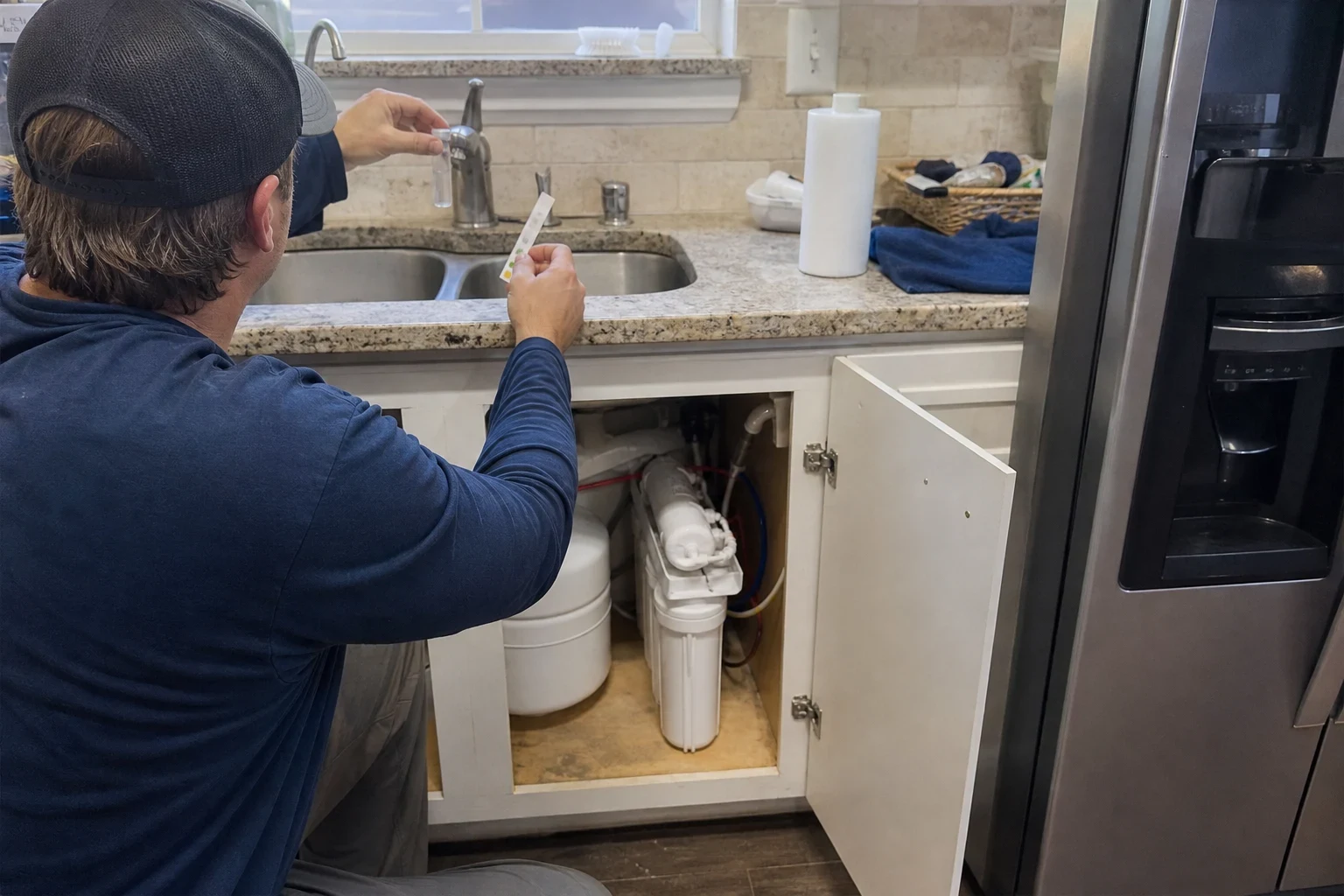
- We begin by testing water at your kitchen tap so the system fits what is really in it. A free water report spells out the results in simple terms.
- Sized for your household
- An undersized filter squeezes your flow when two showers and the washer run together. We match the system to your bathrooms and the people in your home so pressure holds at the busiest times.
- Installed on the main line
- We place the system where the main line comes in, usually in the garage or on an outside wall. A bypass valve keeps water flowing to the house while filters are changed or serviced.
- A sediment stage up front
- Ahead of the carbon sits a sediment stage. It shields the carbon media so it lasts longer, and it stops grit from reaching your fixtures and water heater.
- Tidy up and a tour
- We clean the work area and point out the bypass, the shutoffs and the signs that the filter needs attention. Routine upkeep should be something you can handle without us.
Signs Whole-Home Filtration Fits Your Home
Chlorine smell in the shower
Hot water lets the disinfectant smell rise off the water. If the bathroom smells like a pool, a carbon stage is the fix.
Ice and coffee taste off
Your fridge filter only covers one line. If tea, coffee and ice from the tap all carry that treated taste, filtering at the main line takes care of every source at once.
Grit in aerators and shower heads
Bits of sand or rust caught in faucet screens mean debris is moving through your pipes. It also ends up in your water heater and appliance valves.
You are buying a lot of filters
Pitcher cartridges, shower head filters and faucet filters add up and still miss most of your home. One system can replace the pile.
You just moved in
New owners often want to know what is coming out of the taps. A test and a whole-home filter is a sensible first step.
How the Job Goes
- 1
Water test and talk
We test your water and ask what bothers you about it. Taste, smell, grit or something else. That answer matters as much as the numbers.
- 2
A written plan and price
You get a quote that lists the system, the install and the filter upkeep. If a filter is not what your water needs, we say so.
- 3
Install day
We shut off the water, cut in the system and the bypass, then turn it back on. The job usually wraps up in a few hours. Your taps are dry only while we tie into the main line.
- 4
Flush and check
New carbon media gets flushed until the water runs clear. We check every connection for leaks and confirm pressure at a fixture before we leave.
What Drives the Cost
Your quote comes after we test the water and locate your main line. It shows equipment and labor on separate lines, so the final bill holds no extra charges. Standard professional installation comes included for qualifying homes.
- Cartridges or a carbon tank
- Cartridge housings cost less at the start, but you swap them more often. A large carbon tank costs more on day one and goes much longer between service visits. We show you both side by side, the purchase price and the cost to keep each one going.
- Size of the house
- More bathrooms and more people mean more water moving at once. A bigger system keeps the pressure even under that load, and it carries a higher price than a smaller unit.
- Where the main line sits
- An open, reachable line in the garage keeps the work simple. Tight quarters, long pipe runs or aging pipe that has to be replaced at the connection point take more hours and materials.
- Extra filter stages
- Plenty of homes are fine with carbon alone. Others benefit from a stronger sediment filter in front of it. We only include what your test numbers support.
Questions About Whole-Home Filtration
Something not covered here? (972) 645-3545
Will my water pressure drop with a whole-home filter?
Every filter adds a bit of resistance. One sized correctly should not leave you with a drop you can feel in the shower. Pressure trouble usually traces back to undersized systems or clogged cartridges, so we size for your household and show you when to change cartridges.
Will it soften my water as well?
No. Carbon deals with chlorine, taste and odor, and hardness minerals go straight through. If scale on fixtures is what bothers you most, a softener handles that, and some homes run both.
How much maintenance does it need?
It depends on the kind of system and how much water your household uses each day. Cartridges get changed more often. Media in a carbon tank lasts much longer between changes. Before you buy, we spell out the upkeep for your setup.
Will I still want a drinking water system?
In many homes the carbon stage does enough, and the kitchen tap tastes fine afterward. Some people want an extra step for drinking and cooking water. An under-sink reverse osmosis system handles that at one faucet, and our Reverse Osmosis page covers how it works.
Will a carbon filter kill bacteria?
No. Carbon does not disinfect. For that, read our UV Water Treatment page, and we can talk over whether it fits your home.
Find Out What Your Water Needs
Start with a test at your tap. We will explain what we find and whether a whole-home filter is the right fit before you spend anything.