ServicesUV Water Treatment
UV Water Treatment in Coppell
A UV system shines ultraviolet light on your water as it enters your home. Germs that pass the lamp can't reproduce. It adds no chemicals, doesn't change the taste, and uses about as much power as a light bulb. We size it to your water and your plumbing.
What UV Can and Can't Do
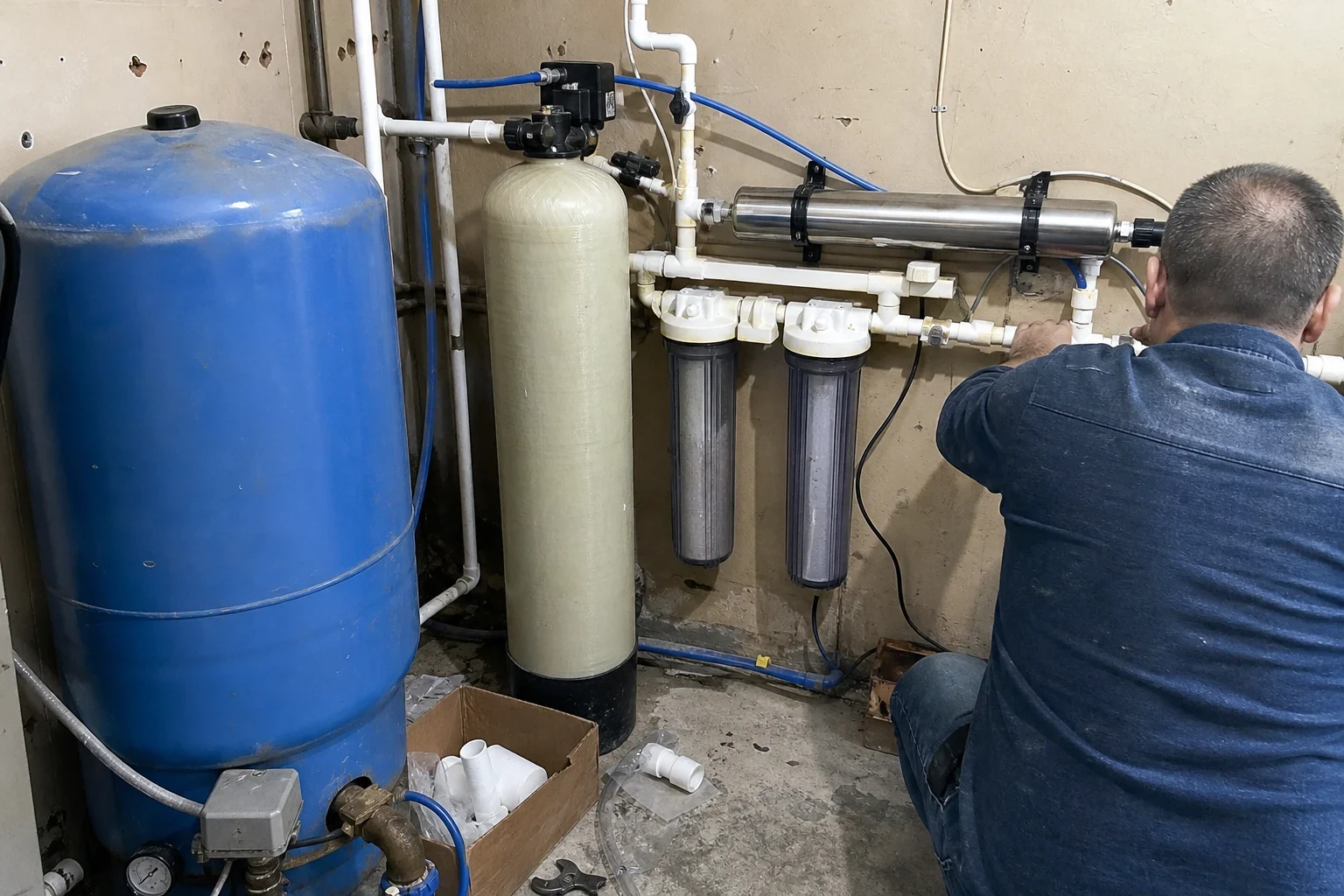
UV is there to disinfect, nothing more. Water moves through a steel chamber where a lamp sits inside a quartz sleeve. The light damages the DNA of bacteria, viruses and cysts, so they cannot multiply and cause illness. That is all it does.
It leaves chlorine, minerals, iron, sediment and lead in the water. For better taste or less scale, you want whole-home filtration or a water softener. UV normally sits at the end of the line, once the water has already been cleaned up.
Most homes in Coppell get treated city water, so UV adds a layer rather than filling a need. Before we quote one, we will tell you straight whether it makes sense in your home.
What Comes With a UV Install
A unit sized to your flow
We size the chamber and lamp to the gallons per minute your home actually uses. An undersized unit lets water pass too fast for a full dose.
A sediment prefilter
Particles cast shadows that germs can hide behind. A prefilter keeps the water clear so the light reaches everything.
A bypass loop
We plumb in valves so the unit can be isolated for a lamp change without shutting off water to the whole house.
Line disinfection after install
Germs already in your pipes are past the lamp. We flush the plumbing downstream with a chlorine solution so you start clean.
A walk-through before we leave
We show you the alarm, the lamp timer and how the sleeve comes out. You'll know what each light and beep means.
Signs UV Treatment Is Worth a Look
- Boil notices make you uneasy
- Some people want a disinfection step of their own at the point where water enters the house. UV gives you that, though you should still follow any city boil notice.
- Someone at home needs extra care
- If a doctor has suggested extra protection for a family member, UV adds a germ barrier without adding chemicals to the water.
- You already filter and want one more step
- Carbon filters remove chlorine, and water can then sit in the pipes without it. A UV unit after the carbon covers that gap.
- Your old UV unit is beeping
- An alarm usually means the lamp is near the end of its life or the sleeve is coated. A lamp past its rated hours can still glow while putting out too little UV to do its job.
How the Job Goes
- 1
Water test and a look around
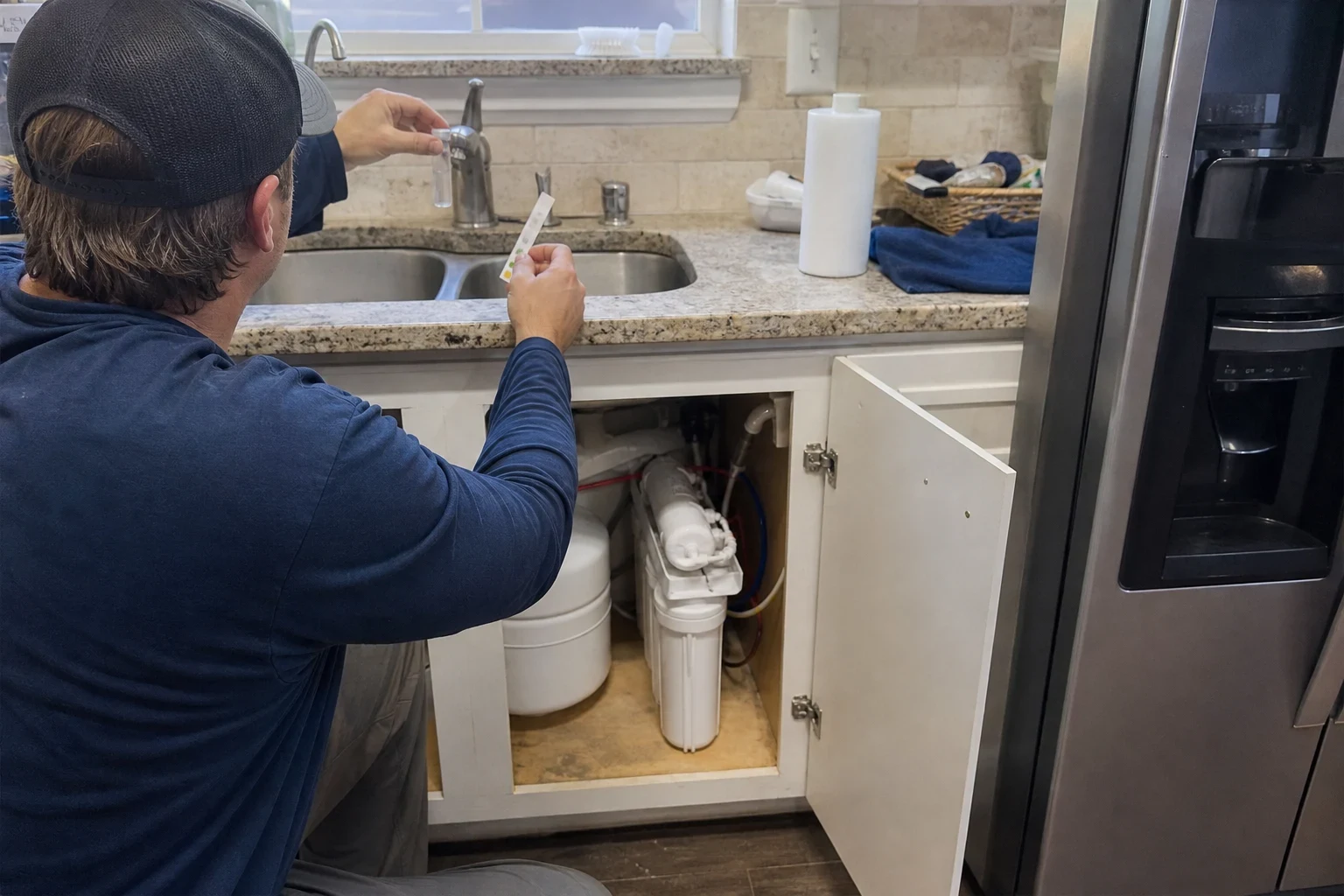
We test your water and check where the main line comes in. UV needs clear water and a nearby outlet, so we look at both.
- 2
An honest recommendation
If hardness or iron would coat the sleeve, we'll say so and explain what should go in front of the lamp. You get a written quote that lists each part.
- 3
Install day
We shut off the water, cut in the prefilter and UV chamber, add the bypass, and plug the controller into its outlet. Then we disinfect the lines and run each tap.
- 4
Check and clean up
We check for leaks, confirm the lamp is on and the alarm works, and clear out our scraps and packaging before we go.
What Sets the Price
Running a UV unit costs less than most systems. The lamp pulls a small, constant amount of electricity, and there is no salt, no chemicals and no water sent to the drain. The price depends mainly on the unit's size, what needs to sit ahead of it and how easy your main line is to get to. Qualifying homes get standard professional installation included.
- How much water flows
- Larger homes with more bathrooms call for a bigger chamber and a stronger lamp so water gets treated at full flow.
- What goes in front
- Clear water only needs a sediment prefilter. Hardness or iron can mean a softener or filter ahead of the lamp, which makes the job bigger.
- Placement and power
- An open garage wall with an outlet nearby keeps things easy. Cramped spaces, long pipe runs or a missing outlet add time.
- Sensors and shutoffs
- Entry-level units come with a lamp timer. Units with a UV sensor or automatic shutoff valve cost more, and they alert you when the dose falls off.
- Annual care
- Expect to replace the lamp once a year and clean the sleeve now and then. We walk you through both so nothing catches you off guard.
UV Treatment Questions
- Will UV change how my water tastes?
- No. It doesn't add or remove anything you can taste. If chlorine taste bothers you, a whole-home carbon filter or a reverse osmosis system under the sink handles that, and UV can sit after either.
- How much power does it use?
- About what a single light bulb uses, running all day. The lamp stays on so it's ready whenever a tap opens. For most homes it's a small line on the electric bill.
- How often does the lamp need replacing?
- Once a year is typical. The lamp keeps glowing after that, but its UV output fades, so a glowing lamp isn't proof it's working. We'll note the date on the unit.
- What happens if the power goes out?
- The lamp goes off and the water passing through isn't treated. If that worries you, a model with an automatic shutoff valve stops flow until power comes back. After a long outage, run the taps for a few minutes.
- Can I add UV to a softener or reverse osmosis system?
- Yes. UV goes after the softener or whole-home filter so the sleeve stays clean. It can also go on the line feeding a reverse osmosis unit if you want both.
Find Out If UV Fits Your Home
We'll test your water, look at your plumbing and tell you straight whether UV is worth it. If it is, you'll get a written quote by phone.