ServicesWater Softeners
Water Softeners in Coppell, Sized to Your Hardness
Hard water leaves scale in your water heater, on fixtures and inside your pipes. We test your water at your home, tell you plainly if a softener makes sense, and install one sized to your readings and the way your household uses water.
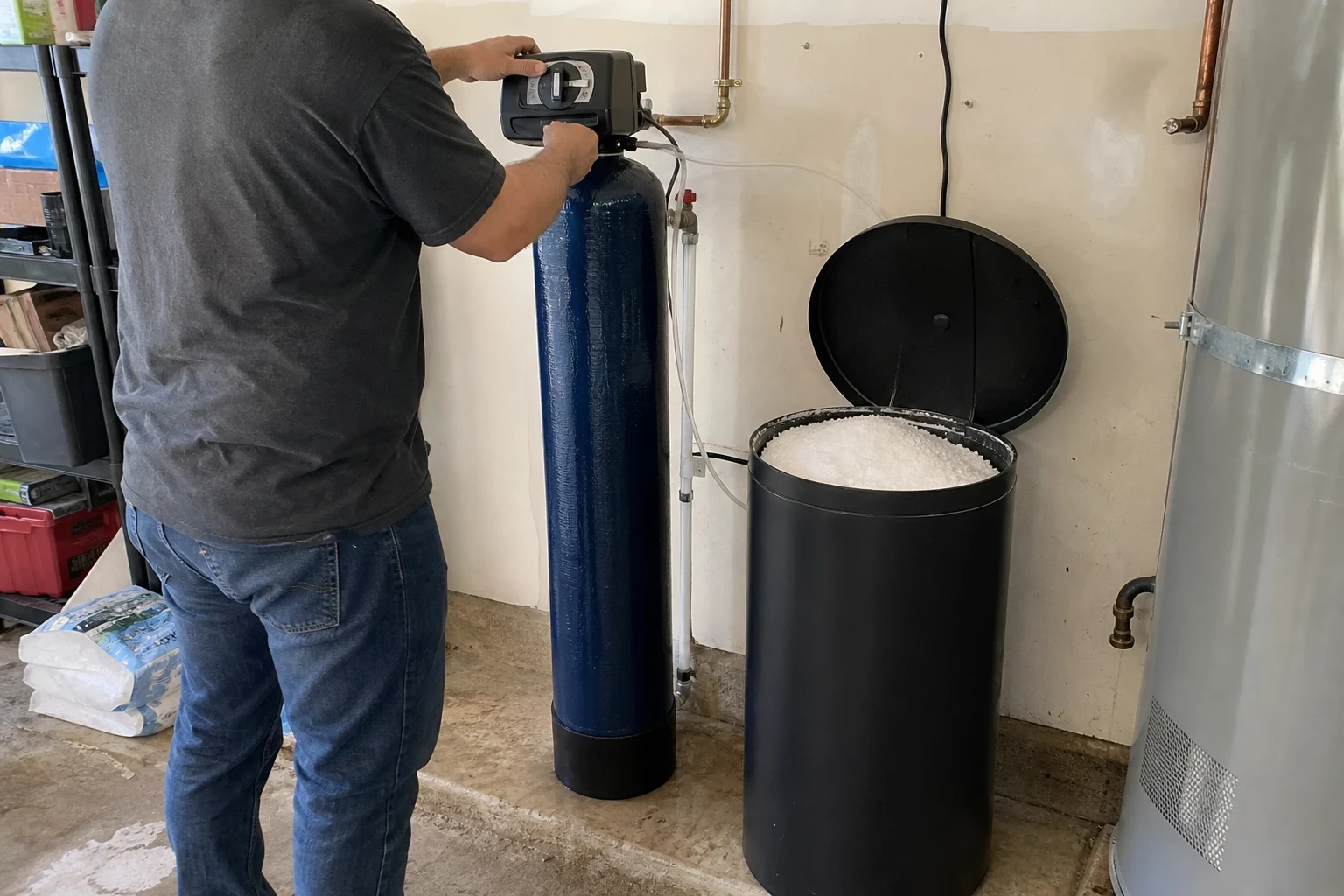
How a Softener Works and When It Earns Its Keep
A softener holds a tank full of small resin beads. Water runs through them, and the beads grab calcium and magnesium while releasing a small amount of sodium or potassium. Those two hard minerals cause the chalky film on faucets, the spots on drinking glasses and the crust that builds up in a water heater. Take them out at the point where water comes into the house, and the buildup quits forming.
That ties straight to what your home costs to run. Scale on a heating element or tank floor works like a blanket, so the heater uses more energy to bring water up to temperature. Soft water also suds up with less effort, so soap, shampoo and detergent go further. How much you save depends on how hard your water is, which is why we take a reading before recommending anything.
Softening does nothing for chlorine taste or odor. If that is what bothers you most, whole-home filtration suits the job better, and we will tell you that.
What a Softener Install Includes
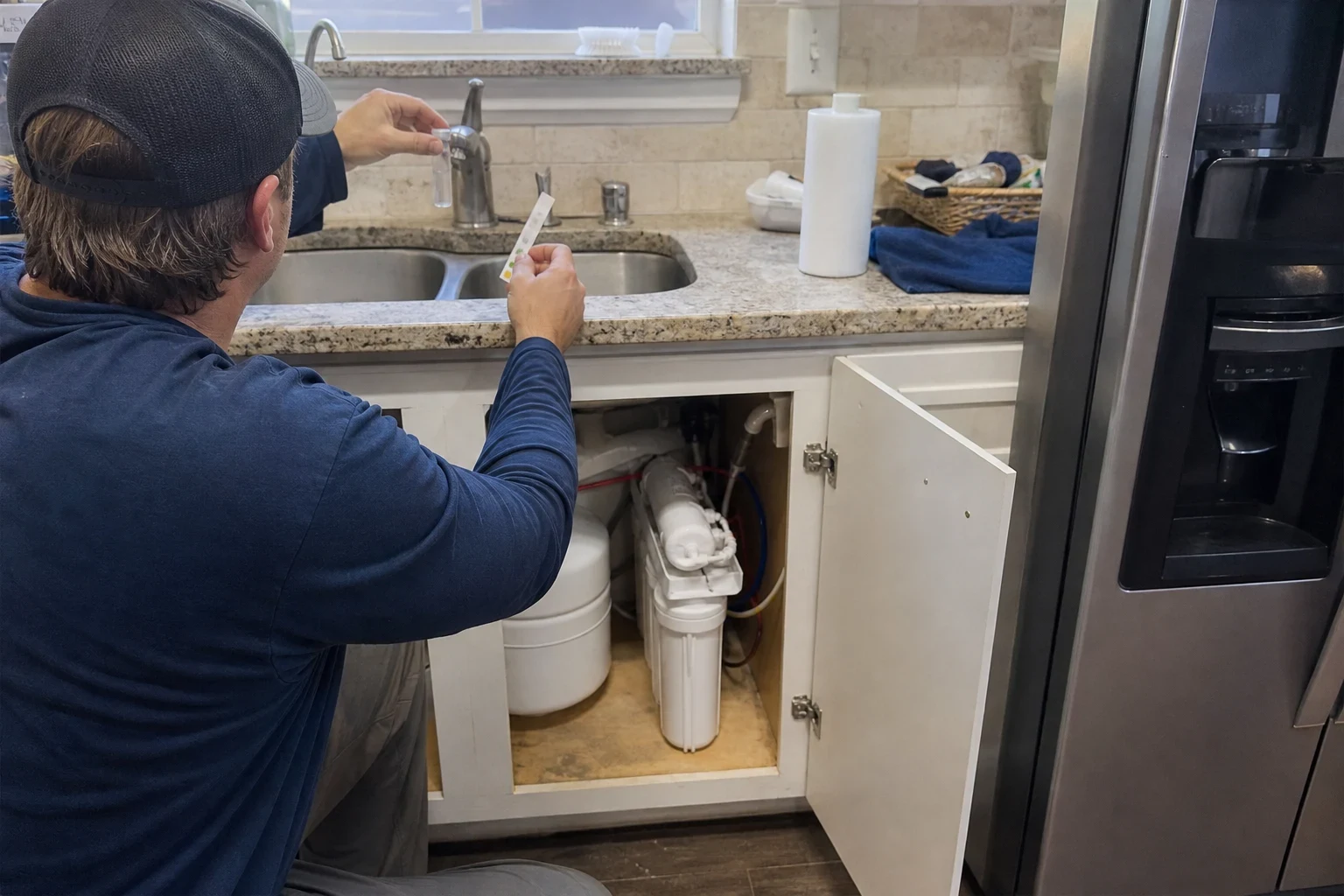
Hardness checked at your tap
We take a hardness reading and check a few other basics on site, so the softener matches the water coming into your home and not a guess.
Matched to your household
We ask how many people live in the house, how many bathrooms get used every day and how often you do laundry. Too small a unit regenerates constantly. Too large a unit means paying for more than you need.
A metered valve, programmed for you
We set the valve to regenerate once a certain volume of water has gone through, instead of on a fixed schedule. That keeps salt and rinse water in line with what your home actually uses.
Bypass and drain done right
With a bypass valve, you can switch the softener off while the house still has water. We fit the drain line with a proper air gap.
Brine tank set up and salted
The brine tank goes next to the softener. We pour in the first load of salt and run one complete regeneration before leaving.
A short walkthrough and cleanup
You see where to add salt, how the bypass handle turns and what the valve screen tells you. Then we wipe down the area and leave with all the packaging.
Signs Hard Water Is Costing You
- White crust on faucets and showerheads
- Chalky rings around fixtures and clogged showerhead holes are mineral scale. It comes back no matter how often you scrub.
- Spotty dishes and cloudy glasses
- If glasses come out of the dishwasher hazy, minerals are drying on them.
- A water heater that pops or rumbles
- Those noises often mean scale has settled in the bottom of the tank. Your heater works harder and longer to reach temperature.
- Soap that will not lather
- Hard water fights soap. You end up using more and still feel a film on your skin and hair.
- Tankless heater flushes coming up often
- Tankless units are sensitive to scale. If yours needs descaling more than you expected, hard water is a likely cause.
How a Softener Job Runs
- 1
Phone call
You tell us what you are seeing and we set a time for a water test at your home.
- 2
Test and straight answer
We measure hardness and go over the results with you. If your water does not need softening, we tell you that and stop there.
- 3
Written quote
If a softener makes sense, you get a quote that lists the unit, the valve and any plumbing work needed. No surprises on install day.
- 4
Install day
Most softeners go in near where water enters the house, often in the garage. If your home has a softener loop, we tie into it. If not, we explain the plumbing needed before we start. Water is usually off for a short stretch only.
- 5
Startup and check
We run a regeneration, test the softened water and confirm the valve settings before we pack up.
What Moves the Price of a Softener
Every home is a little different, so we quote after the test. The biggest factors are how hard your water is and how much plumbing the install takes. Standard professional installation included for qualifying homes.
- Capacity
- Harder water and bigger households need more grain capacity. More capacity means a larger resin tank.
- Valve type
- Metered valves cost a bit more up front than timer valves, but they waste less salt and water over the years.
- Plumbing access
- An existing softener loop keeps the job simple. No loop, a tight closet or a long run to a drain adds labor and parts.
- Pairing with filtration
- Adding a carbon filter for chlorine or an under-sink unit for drinking water changes the total. We price each piece separately so you can choose.
Water Softener Questions
- Do I really need a softener?
- Not always. It depends on your hardness reading and what is bothering you. If the test shows your water is only mildly hard, we will tell you a softener is not worth it. We would rather fix the right problem.
- Will soft water feel slippery?
- A little, at first. That smooth feeling is soap rinsing off fully instead of reacting with minerals. Most people stop noticing it within a week or two.
- How much upkeep does a softener need?
- Mostly adding salt. How often depends on your hardness and water use, and a metered valve keeps that to a minimum. Check the brine tank every month or so and top it off when it gets low.
- Is softened water okay to drink?
- Yes, for most healthy adults. Softening adds a little sodium to the water as it trades out the hard minerals. If you are watching sodium, you can fill the brine tank with potassium chloride instead. Another route is a reverse osmosis unit at the kitchen sink for the water you drink and cook with.
- Will a softener help my water heater use less energy?
- It keeps new scale from forming, which helps the heater transfer heat the way it should. It will not dissolve heavy scale already in an old tank, so a flush may still be worth doing. Tankless heaters tend to benefit the most.
Find Out How Hard Your Water Is
We will test your water at your home and tell you plainly whether a softener is worth it. If it is, you get a clear quote before any work starts.