ServicesReverse Osmosis
Reverse Osmosis Drinking Water for Coppell Kitchens
We install under-sink reverse osmosis systems that put clean, good-tasting water at your kitchen tap for drinking, coffee and cooking. We check your water first, size the system to your family and your sink, and explain the upkeep before you decide.
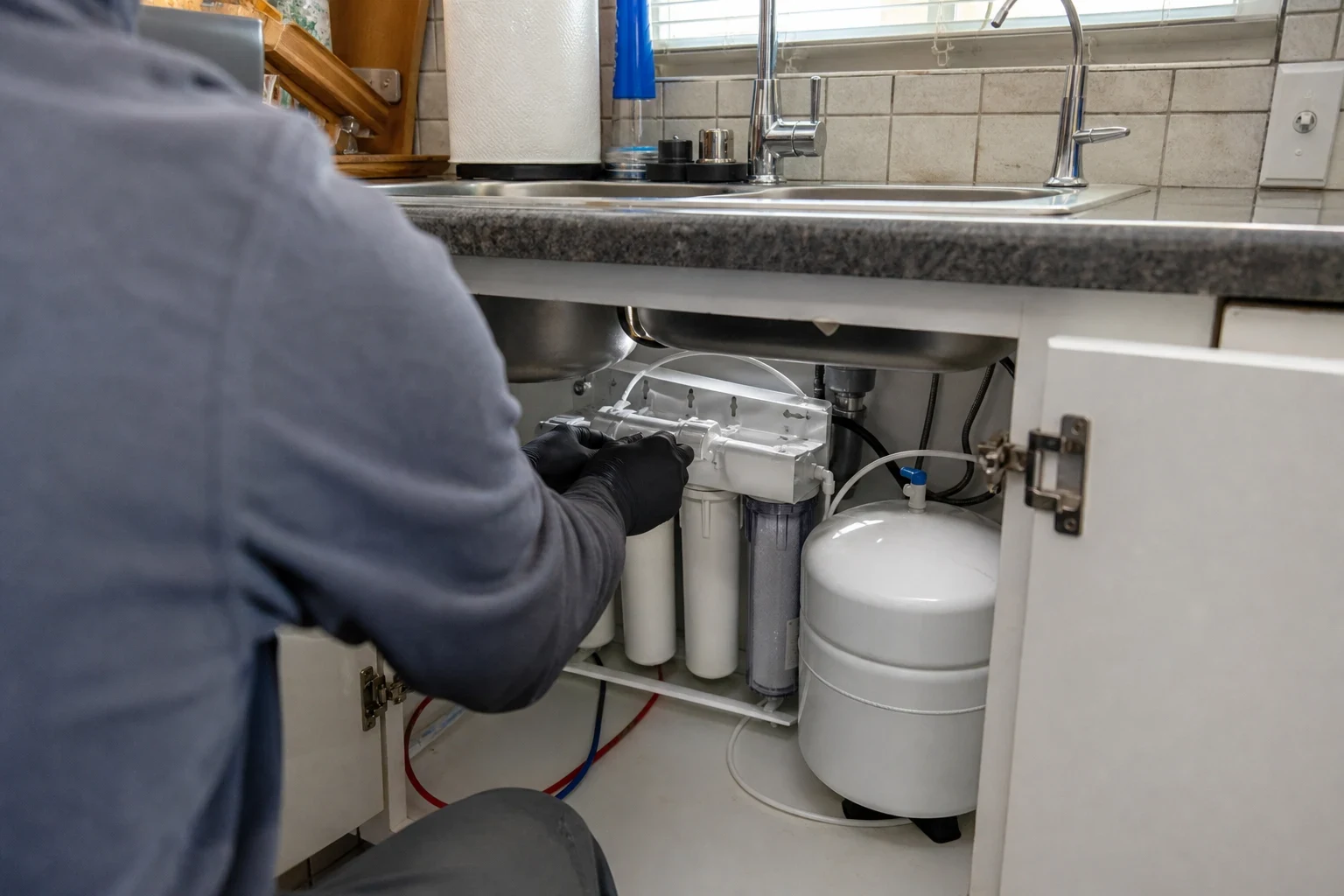
How reverse osmosis works and who it suits
Reverse osmosis forces water through an extremely fine membrane. Most dissolved minerals and salts, along with many trace contaminants, are held back and rinsed to the drain. Carbon stages on either side of the membrane remove the chlorine taste and odor. The small faucet at your sink then pours water that is pleasant to drink.
RO treats one tap, not the whole house. For better water at every faucet and shower, whole-home filtration does that job, and it pairs well with RO. If your main complaint is hard water spots on fixtures, a water softener is what handles it.
Many families like it for one plain reason: no more buying cases of bottled water and carrying them in from the car. In most homes, a year's worth of replacement filters costs less than keeping up a regular bottled water habit.
What comes with an RO install
- A system sized to your use
- We look at how many people drink and cook with the water, then pick a membrane and storage tank that keep up. Too small and you wait on refills. Too big and you paid for capacity you never use.
- Pre-filters and a polishing filter
- Sediment and carbon pre-filters protect the membrane from grit and chlorine. A carbon filter after the tank cleans up the taste right before it reaches your glass.
- A dedicated faucet at the sink
- We mount a separate drinking water faucet on the sink or countertop. If your sink has a spare hole, we use it. If not, we drill one, and we tell you before we do.
- Lower-waste options
- Every RO system sends some water to the drain while it works. A permeate pump cuts that waste and fills the tank faster, and it runs on water pressure with no electricity. We explain the trade-off so you can choose.
- Refrigerator hookup
- Tell us if your fridge has a water dispenser or makes its own cubes. We can tie it into the RO tank so the door pours the same water as the sink faucet. The cubes freeze clear with no off taste.
- Cleanup and a walkthrough
- We put your cabinet back in order, wipe up and take the packaging with us. Then we show you how to change filters and shut the system off.
Signs an RO system is worth a look
You buy bottled water every week
Through a long Coppell summer, a family goes through a lot of drinking water. An RO system gives you the same clean taste from a faucet, with no cases to carry or bottles to recycle.
Your tap water tastes like a pool
The disinfectant used in city water keeps it safe, but some people can't get past the taste. The carbon stages in an RO system take it out at the tap.
White crust in the kettle or coffee maker
That scale comes from dissolved minerals. RO removes most of them from the water you drink and cook with, so your coffee maker needs descaling less often.
Older plumbing in your home
Older pipes and fixtures can add metals to water after it leaves the city's lines. RO is a sensible extra step for the water your family drinks every day.
Coffee and tea taste off
Chlorine and minerals change how coffee and tea taste. Cleaner water lets the flavor come through.
How an install goes
- 1
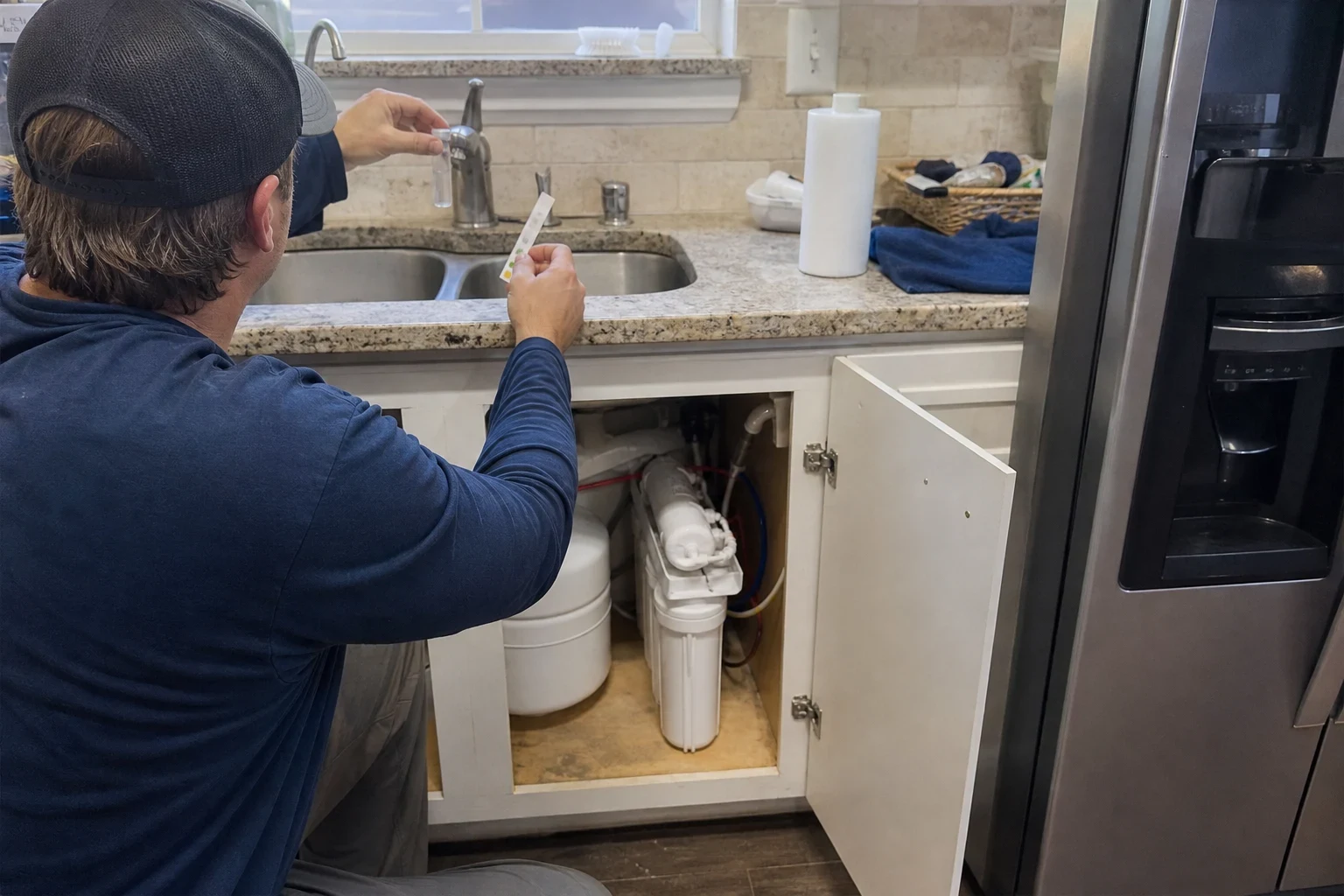
A phone call and a water test
Call us and we set up a water test at your home. We go over the results with you and tell you whether RO makes sense, or whether something else fits better.
- 2
A written quote first
You get the price on paper for the system and the install. Nothing gets added on the day without your OK.
- 3
Install day
We shut off the cold line under the sink, add a feed valve, mount the filters and tank, connect the drain line and set the faucet. Water to the rest of your home stays on for most of the visit.
- 4
Flush and check
We run the system to flush the new filters, check every fitting for drips and pour a glass with you.
- 5
Your filter schedule
We leave a short schedule inside the cabinet door. Pre-filters typically need swapping every 6 to 12 months. The membrane lasts much longer, and how long comes down to what is in your water and how much your family draws from that faucet.
What moves the price of an RO system
We don't put a number on an RO system until we know your water and see your sink. The price depends on the system you pick and what it takes to fit it in your kitchen. Standard professional installation included for qualifying homes, and you get the full price in writing before anything is installed.
- System type and stages
- A basic four-stage unit costs less than one with extra stages, a remineralizing filter or a tankless design. We match the system to what your test shows, not to the biggest box on the shelf.
- Waste-saving parts
- A permeate pump or a higher-efficiency membrane adds some cost up front. It sends less water to the drain, which lowers your water use month after month.
- Your sink and cabinet
- Drilling stone or quartz for a faucet takes more time than using an open hole. A tight cabinet or a garbage disposal in the way can change how we route the lines.
- Extra lines
- Running water to the fridge or a second faucet adds tubing, fittings and labor.
- Ongoing filters
- The real running cost is replacement filters. We tell you what they cost and how often they need changing before you buy.
Reverse osmosis questions we hear
Something not covered here? (972) 645-3545
Does an RO system waste a lot of water?
Every RO system sends some water down the drain to rinse the membrane. Older designs wasted a lot. Newer membranes and a permeate pump cut that down a good deal, and we can show you the numbers for the system you're looking at.
Will it take the minerals out of my water?
Yes, RO removes most dissolved minerals. Some people like the clean taste, and others prefer a little mineral back in. We can add a remineralizing filter that puts a small amount of calcium and magnesium back into the water.
Does it need electricity?
A standard system runs on your water pressure alone. If your pressure is low, we may suggest a small booster pump, which does plug in under the sink. We check your pressure during the visit so you know ahead of time.
Why does the RO faucet run slower than my main faucet?
The membrane makes water slowly, so the system stores it in a small tank. The faucet draws from that tank at a gentler flow. It fills a glass or a pot fine, and the tank refills on its own.
Do I need RO if I already have whole-home filtration?
Not always. Whole-home filtration takes out chlorine and sediment at every tap. RO goes further at one faucet, removing dissolved minerals and many trace contaminants. Lots of homes use both, and we'll tell you honestly whether you need the second one.
Start with a look at your water
Call and we'll set up a water test at your home, look under your sink and tell you plainly if reverse osmosis is the right fit. If it is, you get a written quote.